
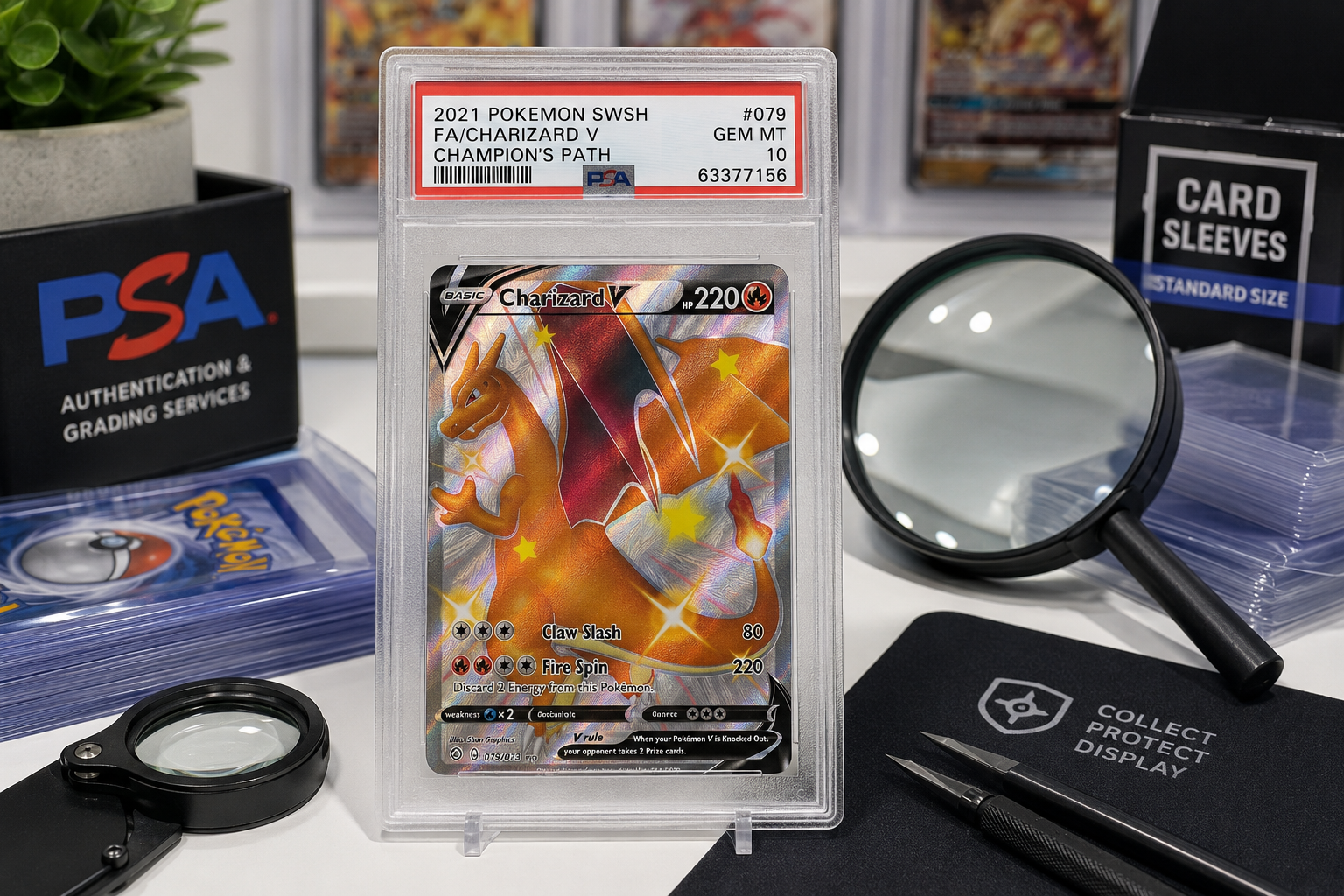
Sending a card to PSA is one of the most exciting and terrifying things a collector can do. One minute you are looking at your card thinking, “This is definitely a 10.” The next minute you are under a lamp at midnight inspecting corners like you work for a tiny cardboard forensics lab.
PSA grading has become a huge part of the hobby because condition matters. A raw card may be cool, but a high-grade slab can turn that same card into a centerpiece. It gives collectors protection, authentication, and a clean display piece that says, “Yes, I care deeply about corners.”
But grading is also humbling. That card you thought was flawless? PSA may politely disagree with the energy of a strict math teacher. Centering, surface, edges, and corners all matter. A tiny print line can be the difference between celebration and emotional damage.
Still, grading is not just about chasing 10s. Sometimes it is about preserving a card you love. Sometimes it is about making a collection easier to sell. And sometimes it is about proving to yourself that the card you pulled while wearing lucky socks really was special.